Vacuum Sealing Jars: Keep Homemade Pesto, Tomato Sauce and Sauces Fresh for Longer
Vacuum sealing homemade pesto, tomato sauce or herb oil in jars: how to preserve aroma and freshness for longer – with a step-by-step guide and the most important food-safety notes.
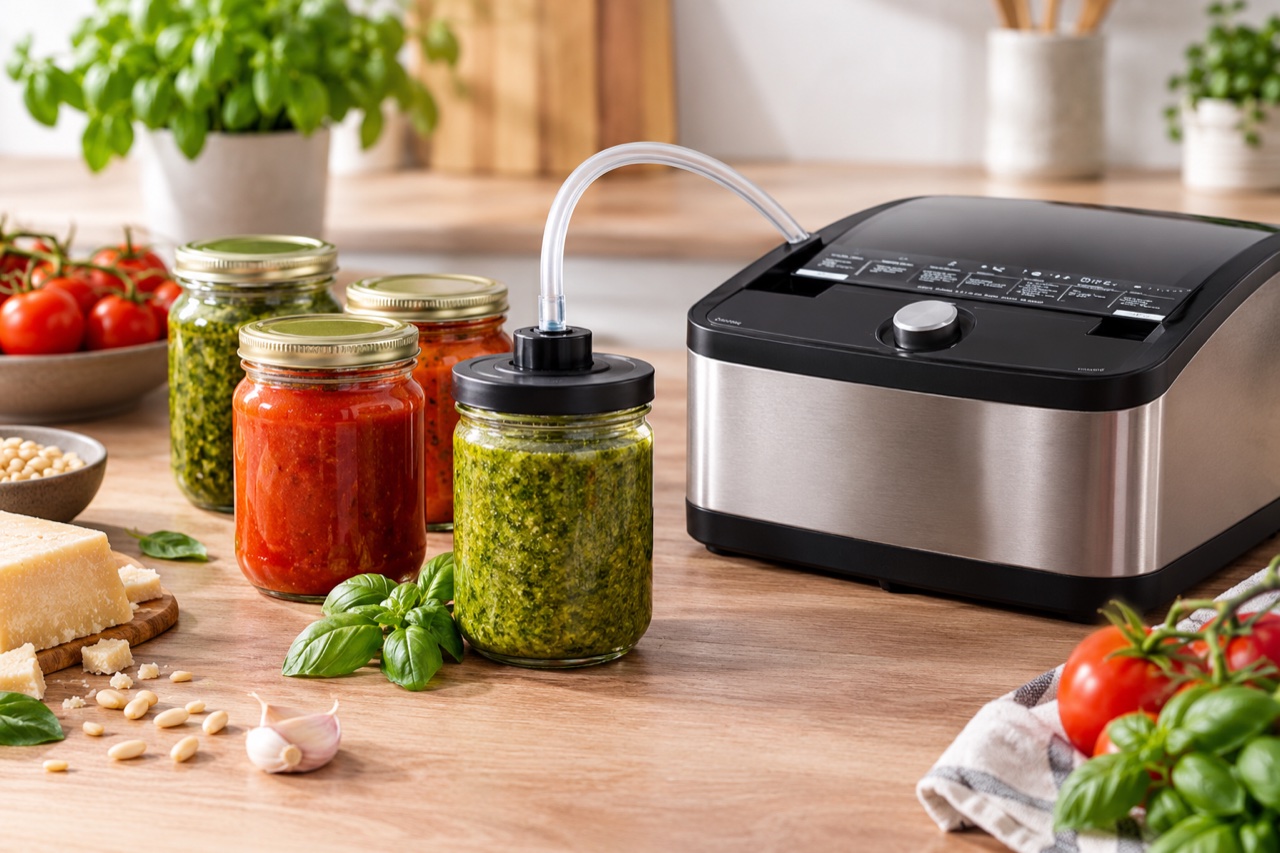
A freshly made basil pesto, a slow-simmered tomato sauce or an aromatic herb oil – homemade sauces simply taste better. But there is often more left over than you can use in a day. To make sure nothing goes to waste and the flavour lasts as long as possible, it is worth vacuum sealing jars.
In this guide you will learn why vacuum sealing sauces in jars is worthwhile, which foods are suitable, how to proceed step by step – and which safety rules you absolutely must follow. Because one thing up front: vacuum sealing keeps food fresh for longer, but it does not replace a proper preservation method.
Why vacuum seal homemade sauces in jars?
When you vacuum seal, most of the air is drawn out of the jar. Less oxygen means that oxidation and the growth of many spoilage microbes are slowed down. For your homemade sauces, this has several benefits:
- Aroma and colour last longer: pesto browns more slowly, herbs keep their fresh green.
- Less food waste: leftovers can be stored in portions instead of being thrown away.
- Order and overview: jars stack neatly, are reusable and show their contents at a glance.
- Practical portions: small jars for single meals save time and reduce opened leftovers.
The idea of storing sauce in a jar gains a whole new quality through vacuum sealing – provided the basic storage rules are right.
Which foods are suitable for vacuum sealing in jars?
In principle, many sauces and preparations can be vacuum sealed. What matters is not only the consistency, but also how you store the jar afterwards.
Particularly suitable
- Vacuum sealing pesto: basil, rocket or tomato pesto benefits greatly from removing oxygen. A thin layer of oil on top additionally helps protect the aroma.
- Tomato and pasta sauce: a homemade tomato sauce can be vacuum sealed in portions and kept in the fridge or freezer.
- Vegetable and herb sauces: puréed vegetable sauces, herb oils and spice pastes stay noticeably fresher when vacuum sealed.
With caution
- Very liquid sauces can be sucked up during vacuum sealing. If available, use your device's liquid or pulse mode, or freeze the sauce slightly beforehand.
- Warm preparations should always be left to cool before you close and vacuum seal the jar.
Important: vacuum sealing is not preservation
This point is crucial for your health: vacuum sealing alone does not make a sauce safe to store at room temperature. Removing oxygen slows many spoilage processes, but it does not kill bacteria or their spores.
On the contrary: a low-oxygen environment can even favour certain microbes. Clostridium botulinum, the pathogen that causes dangerous botulism, prefers to grow in airtight, low-acid foods at room temperature. Therefore:
- Fresh pesto and perishable sauces always belong in the fridge or freezer – even when vacuum sealed.
- Making tomato sauce shelf-stable for storage at room temperature only works through a tested canning recipe with sufficient acidity and correct processing times – not through vacuum sealing.
- Never rely on a merely vacuum-sealed jar being safe in the cupboard.
Vacuum sealing is therefore an excellent way to extend freshness in the fridge or freezer – but it is no substitute for proper canning.
Vacuum sealing jars: step by step
To vacuum seal jars you need a vacuum sealer with a jar or accessory function and a matching hose, compatible lids or special vacuum containers. With a chamber vacuum sealer, even liquid sauces work particularly reliably.
- Clean the jar and lid: rinse both thoroughly and dry them. For a longer shelf life you can also boil the jars.
- Prepare the sauce: let warm sauces cool completely. Chill very liquid sauces or freeze them slightly beforehand.
- Fill leaving headspace: leave about 2 cm of space at the top so the vacuum can form without sauce being sucked up.
- Clean the rim: wipe the jar rim carefully. Residue on the rim prevents a clean vacuum.
- Place the lid and attach the connector: attach the vacuum connector or hose according to your device's instructions.
- Draw the vacuum: start the process. For liquid sauces, use the liquid or pulse mode to avoid over-suction.
- Check, label, store: make sure the lid sits firmly, label the jar with contents and date, and place it in the fridge or freezer.
Practical tips for filling, sealing and storing
- Don't overfill: headspace is important for a good vacuum.
- Oil layer for pesto: a thin layer of olive oil over the pesto further protects against oxidation.
- Chill liquids first: chilled or slightly frozen sauces vacuum seal more cleanly.
- Clean rims: a grease-free, dry rim ensures a tight seal.
- Always label: note contents and date to keep track.
- Choose small jars: portion sizes avoid opened leftovers.
- Store correctly: perishable sauces in the fridge, for longer storage in the freezer.
Vacuum sealing, refrigerating, freezing or canning – the difference
These four methods are often confused but serve different purposes:
- Refrigerating: slows spoilage in the short term. Combined with vacuum sealing, sauces stay fresh a few days longer.
- Vacuum sealing: removes oxygen and thus extends freshness – always in addition to refrigerating or freezing, never as the sole protection.
- Freezing: largely stops the growth of microorganisms and is excellent for pesto, tomato and vegetable sauces for weeks to months.
- Canning (preserving): the only one of these methods that – with a tested recipe – allows storage at room temperature, because the food is heated sufficiently.
Common mistakes and how to avoid them
- Jar filled too full: without headspace, sauce is sucked up and the seal fails.
- Wet or greasy rims: prevent a tight vacuum – always wipe the rim.
- Liquid sauce without the right mode: leads to over-suction. Chill first or use pulse mode.
- Storing at room temperature: the most dangerous mistake. Vacuum-sealed, non-canned sauces belong in the fridge or freezer.
- No date noted: without labelling you quickly lose track of freshness.
- Unsuitable lids: a reliable vacuum only forms with compatible lids or vacuum containers.
FAQ – Common questions about vacuum sealing sauces in jars
How long does vacuum-sealed pesto last in the fridge?
Vacuum-sealed pesto usually stays fresh in the fridge a few days longer than an open jar. Rely on its appearance and smell, always keep it refrigerated, and when in doubt, throw it away.
Can I store tomato sauce at room temperature by vacuum sealing it?
No. For storage at room temperature, the tomato sauce must be processed using a tested canning recipe with sufficient acidity and correct heating. Vacuum sealing alone is not enough.
Which jars and lids are suitable?
Use sturdy jars with compatible vacuum lids or special vacuum containers. Check your vacuum sealer's instructions for which accessories are supported.
Can I freeze vacuum-sealed sauces?
Yes. Leave enough headspace, as the contents expand when freezing, and use freezer-safe jars.
How do I recognise that a sauce has gone off?
Signs include an unusual smell, a bulging lid, bubbling or discolouration. Never taste suspicious sauces – dispose of them when in doubt.
Do I need a special vacuum sealer for jars?
To vacuum seal jars you need a device with a jar or accessory function and a matching hose, or a vacuum container with a suitable connector. Plain bag sealers without an accessory port are generally not suitable. A chamber vacuum sealer gives the best results for liquid sauces, as the vacuum is built up evenly throughout the chamber.
Can I reuse the same jar?
Yes. Jars and compatible vacuum lids are usually reusable – clean them thoroughly between uses and check the lids for damage so the vacuum holds reliably.
Conclusion: extend freshness with the right equipment
Vacuum sealing jars is a simple and effective way to give homemade pesto, tomato sauce and other sauces more freshness and to save food. The key remains: vacuum sealing extends shelf life in the fridge or freezer, but does not replace proper canning for storage at room temperature.
If you regularly want to vacuum seal food, the right equipment is worthwhile: a reliable vacuum sealer, reusable vacuum containers and jars as well as the right vacuum accessories such as hoses and compatible lids. In our shop you will find a suitable selection – for more freshness, less waste and full flavour from your own kitchen.