Vacuum bag thickness explained: which thickness do you need?
Vacuum bags come in different thicknesses, from 60 to 160 µm. We explain what microns mean, which thickness suits meat, fish, vegetables or sous-vide, and why thicker isn't automatically better.
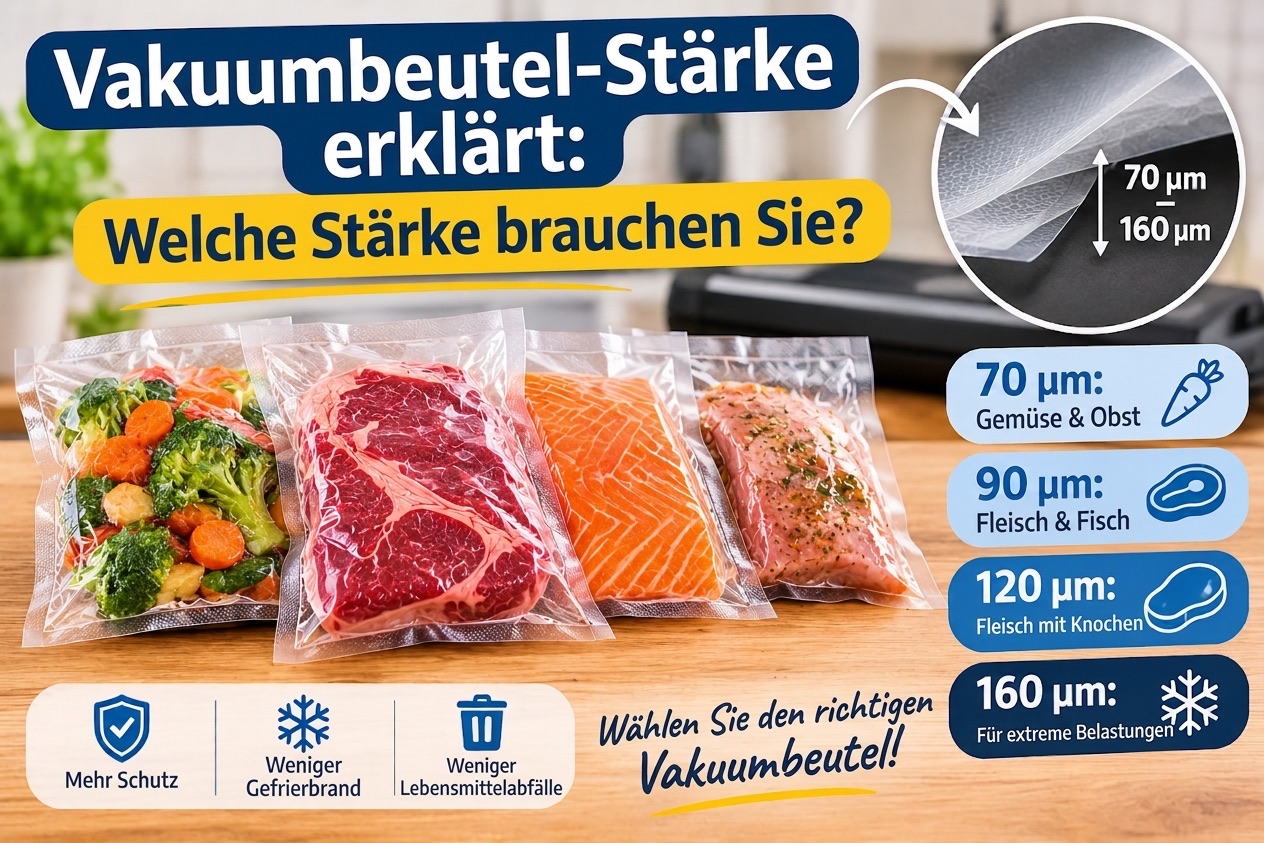
Vacuum bags come in different thicknesses, and choosing the right one is important for protecting food, preventing leaks and getting the best results from your vacuum sealer.
But what does bag thickness actually mean? Is a thicker vacuum bag always better? And which thickness should you use for meat, fish, vegetables or long-term freezer storage? Let's break it down.
1. Understanding vacuum bag thickness
Vacuum bag thickness is usually measured in microns (µm) or mils.
- Micron (µm): one thousandth of a millimetre.
- Mil: one thousandth of an inch (25.4 microns).
For reference, microns ↔ mils:
- 60 µm ≈ 2.36 mil
- 70 µm ≈ 2.76 mil
- 80 µm ≈ 3.15 mil
- 90 µm ≈ 3.54 mil
- 100 µm ≈ 3.94 mil
- 120 µm ≈ 4.72 mil
A thicker bag generally provides better resistance to punctures and mechanical damage. However, material quality, construction and sealing compatibility also matter.
2. Comparing different vacuum bag thicknesses
A practical guide to the most common thickness ranges and their applications:
- 60–70 µm: vegetables, fruit, boneless meat, dry food. Main advantage: flexible and economical.
- 80–90 µm: beef, pork, chicken, fish, cheese. Main advantage: good balance of strength and flexibility.
- 100–120 µm: bone-in meat, larger cuts, harder foods. Main advantage: better puncture resistance.
- 140–160 µm: heavy products, sharp edges, demanding storage. Main advantage: extra mechanical protection.
These are general guidelines. Actual performance depends on the bag material, number of layers, manufacturing quality and intended use.
3. Which vacuum bag thickness should you use?
60–70 microns – everyday food storage
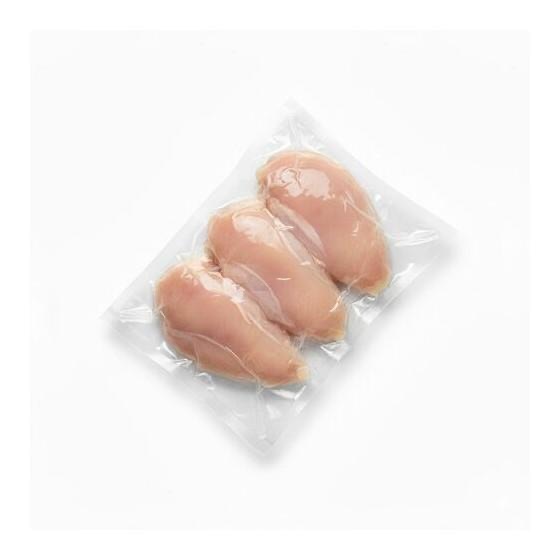
Suitable for boneless chicken, vegetables, fruit, bread, nuts and other relatively soft products. A good economical choice for everyday portions.
80–90 microns – general-purpose storage
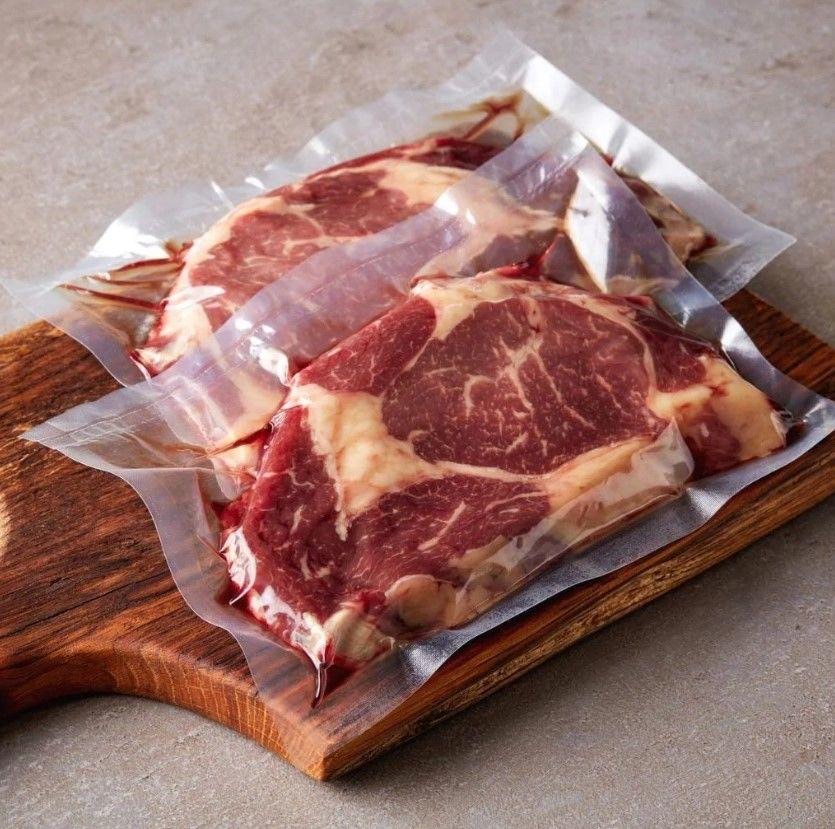
A versatile option for beef steaks, pork, chicken portions, fish fillets, cheese and everyday freezer storage.
100–120 microns – more demanding products
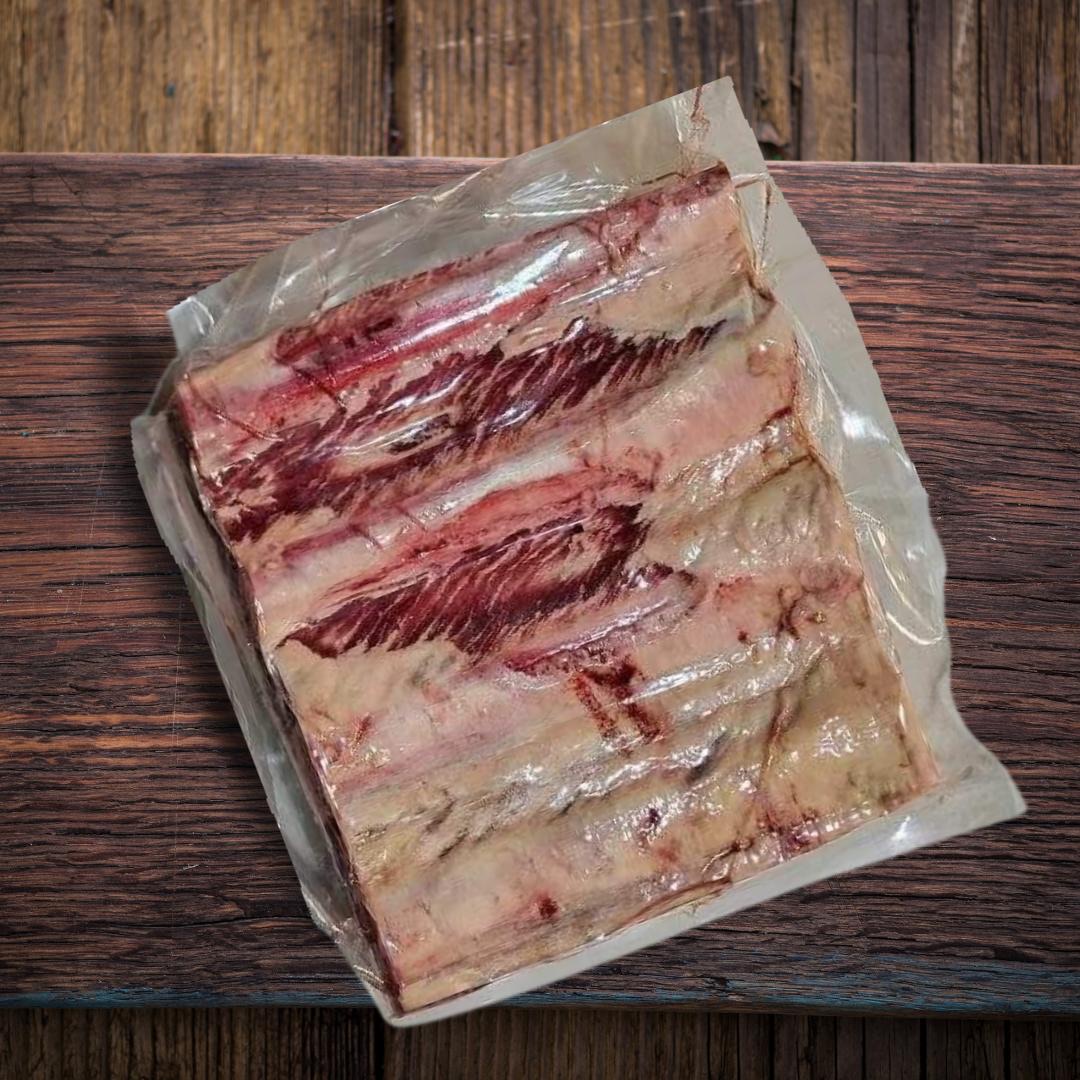
Better suited to bone-in meat, larger cuts, products with harder edges and food that will be handled frequently.
140–160 microns – heavy-duty protection
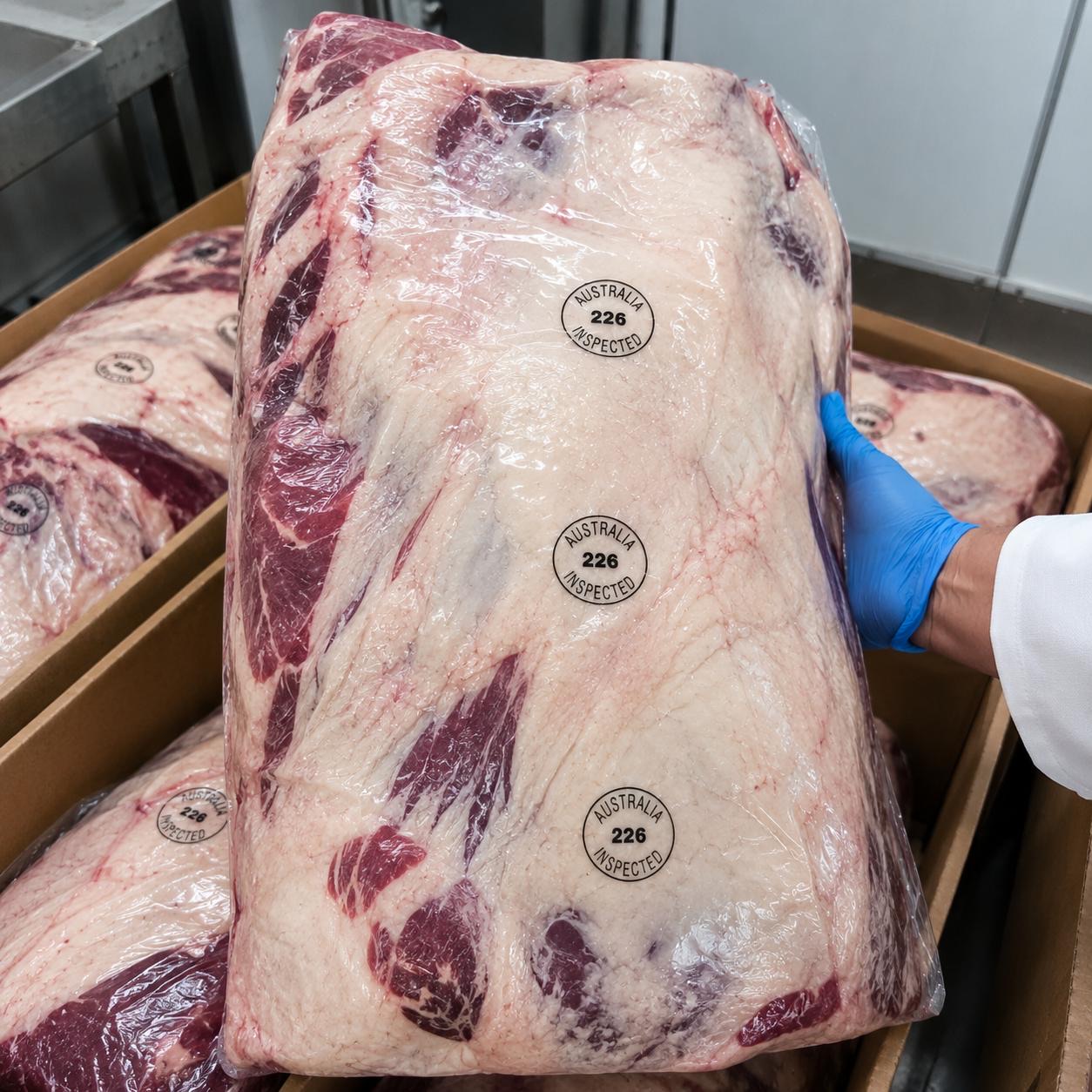
Designed for demanding applications, including heavy products, sharp edges and commercial food packaging where additional durability is needed.
4. Does a thicker vacuum bag always mean better quality?
Not necessarily! A thicker bag offers better resistance to punctures and tearing, but it doesn't automatically provide better food preservation. There are several other factors to consider:
- Material composition: PA/PE multilayer films combine mechanical strength with an oxygen barrier and a heat-sealable layer.
- Oxygen barrier: important for slowing oxidation and preserving food quality.
- Seal strength: a reliable seal prevents air from entering the package.
- Machine compatibility: the bag must work with your particular vacuum sealer.
- Temperature resistance: not every vacuum bag is suitable for sous-vide cooking or boiling.
For example, an 80-micron high-quality multilayer bag can perform better than a poorly manufactured 100-micron bag.
5. Smooth vs. embossed vacuum bags: does thickness matter?
Besides thickness, the surface structure of a vacuum bag is another important consideration.
Smooth vacuum bags
- flat surfaces on both sides,
- designed primarily for chamber vacuum sealers,
- commonly used in butcher shops, restaurants and food production.
Embossed vacuum bags
- textured or patterned surface,
- designed for external suction vacuum sealers,
- the texture creates channels that allow air to escape.
Important: a thicker bag is not automatically compatible with every vacuum sealer. Always check the manufacturer's recommended bag type and maximum thickness.
6. What about sous-vide cooking?
If you plan to cook food in a water bath using the sous-vide method, choosing the correct bag is particularly important. Not every vacuum bag is designed to withstand prolonged exposure to high temperatures.
Look for bags specifically certified or rated for sous-vide cooking, and check their maximum temperature and cooking duration. Some specialised bags support temperatures up to 100–121 °C, depending on their construction.
7. How to choose the right vacuum bag
A quick recommendation as a starting point:
- Everyday food storage: 70–90 µm
- Meat and fish: 80–90 µm
- Bone-in meat: 100–120 µm
- Heavy-duty / commercial packaging: 140–160 µm
- Sous-vide cooking: a temperature-rated bag
Conclusion: choose the right thickness for your needs
Choosing the right vacuum bag is about finding the right balance between durability, flexibility, protection and price. For most households, 80–90 micron vacuum bags offer a practical balance for everyday food storage. If you regularly package bone-in meat or products with sharp edges, consider thicker options.
Remember: the best vacuum bag isn't necessarily the thickest one. It's the one that matches your food, your vacuum sealer and your storage requirements.
Frequently asked questions (FAQ)
What does the micron (µm) figure mean?
Microns measure the film thickness – one micron is a thousandth of a millimetre. The higher the number, the thicker and generally more puncture-resistant the bag.
Which thickness is ideal for home use?
For most applications, 80–90 µm is the best compromise of strength, flexibility and price. For bone-in meat or sharp-edged products, 100–120 µm makes sense.
Can I use embossed bags in a chamber sealer?
Chamber sealers work with smooth bags. Embossed bags are made for external sealers – the channels in the texture are what let the air be drawn out there.
Are all vacuum bags suitable for sous-vide?
No. Only use bags explicitly rated for sous-vide, and observe the stated maximum temperature and cooking time.
Looking for the right vacuum bags, rolls and sealers? Explore Planeta's vacuum sealing products – or get in touch, we are happy to help you choose.